


This is part of Substack Summer for Summer 2026. You can read more about the original Substack Summer here. 2026 is the second year of the Vinny Reads Substack Summer.
Substack Summer Overview
What is this? - Each Summer I try to devote a good portion of my reading to books by Substack authors. Each review is broken down as follows:
Just the Facts - all the basic info about the book/novel/story
Pump the Tires1 - this is my bias disclaimer where I lay out what relationship I have, if any, with the Substack writer whose work I’m discussing. It works on a 1-4 scale; 1 being I barely know this person and 4 being you cannot trust a word I say.
Overview - this is my “review” of the work in question, including any:
Stick-taps - positive aspects I really enjoyed
Chirps - anything about the work that didn’t work for me
Overtime - miscellaneous thoughts and an update on the overall progress of the Substack Summer project.
Just the Facts
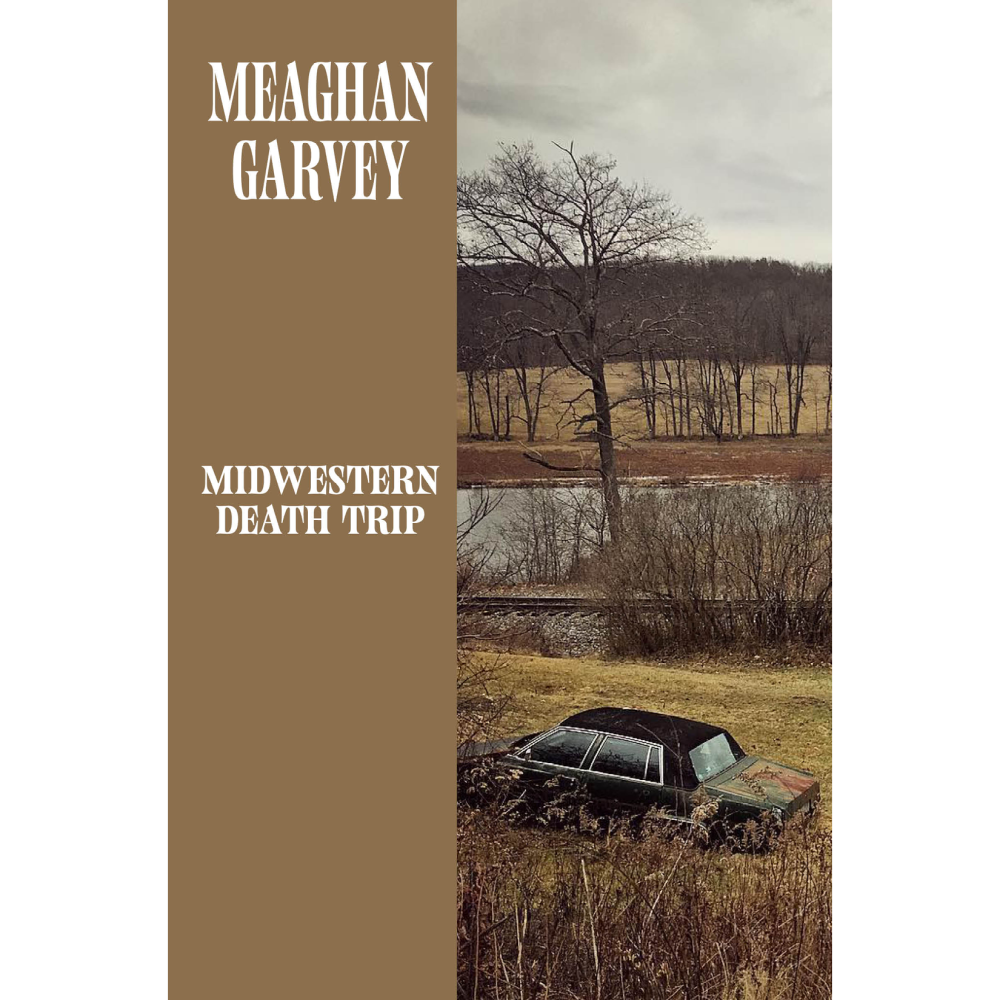
Title: Midwestern Death Trip
Author: Meaghan Garvey
Format: Paperback.
Genre: Part-travelogue, part-dark-night-of-the-soul memoir.
Substack: SCARY COOL SAD GOODBYE
Length: 237 paper-pages.
Vinny’s Blurb: Hunter S. Thompson’s self-destructive tendencies meet Anthony Bourdain’s pathos in the Midwest barrooms and towns that coastal elites fly over. Moving, engaging, vulnerable and enlightening — Garvey’s search for herself in the forgotten places is a romantically melancholy and an appropriate eulogy for the America that was promised.
Pump the Tires
🫥⚫⚫⚫ 1/4
I am an admirer of Meaghan Garvey’s newsletter, SCARY COOL SAD GOODBYE, and her occasional dispatches for County Highway. I came in with some idea of what to expect, but without any preconceptions or pesky interpersonal connections.
Overview
If an 18-year-old Vinny Reads had a copy of this book, it would’ve ruined his life. I’d have dropped out of college, bought an old Mustang, and taken off (mid-)west in search of this dark-haired, tattooed woman in a blood-red Caddy cruising the hardest dives in a part of the country aptly named “The Driftless.” This is the sort of romantic idealism that has been largely snuffed out of the lives of Millennials (and our younger counterparts), but here is a sort of Jill Kerouac, on the road, in the bars, and more often than not: on the edge.
It’s almost a challenge to read Midwestern Death Trip as something other than fiction; the people, the places, and the lives that make up this story have become almost fantasy in modern America. And make no mistake, this is a distinctly American book, for all its goods (Friday fish fries, cheap beers, immaculate scenery) and ills (opioids, domestic violence, hollowed out mill towns, Illinois Nazis2). The chapter “Mayflies” interweaves some of America’s homegrown mythology with the truth of reality, typified by the story of Elvis that closes the chapter out.
These threads and themes dance through the book, creating a chaotic but beautiful waltz. America is a land of contradictions, as is every person that lives in it, whether they reside in New York, NY or Cairo, IL. Garvey examines these contradictions while touching on her own; welcomed everywhere but always playing the stranger. Indeed, as Garvey seems to become less and less enchanted by life on the road, the shine starts to come off the pleather barstools and neon lights and room-temp Hamm’s. And as the fever dream of the 2020’s unfolds around her, Garvey seems like she’s clinging desperately to not picking a side while battle lines are being drawn around her spot at the bar. Desperate hope that American wanderlust and “the kindness of strangers” can still exist in our moment.
The American promise is the pursuit of happiness, not the guarantee of it. Drive on, Meaghan.
Stick-taps
As someone who developed a deep connection to the Garvey “character” throughout reading this book, I was left wanting some denouement, some lesson, some sense of hope for a brighter future. This is probably the correct choice, because it broke my heart in a way that good books do.
One of the brilliant tricks of this book is how Garvey mirrors the emotional distance between reader and author that mirrors the emotional distance between the author and her subjects/surroundings. A veneer of detachment but palpable ennui and vulnerability under the surface.
Chirps
I think my only complaint is that the connective tissues between each of the vignettes in MWDT is implied; Garvey leaves you to draw your own conclusions. But I wonder if it’s partially self-protective. There is a palpable sense of loneliness through the book, but Garvey never names it. It’s that last bit of emotional distance she keeps from the reader.
Overtime
I love a dive bar. More than the ambience or the cheap drinks, what I love is camaraderie. Lost souls, shipwrecked together at this lacquered bar-top, trading war stories and unrequited loves. Reading Midwestern Death Trip transported not just to the carpeted dinner halls and barrooms of the Midwest, but also back to my own less-peripatetic but equally beer-soaked “glory” days. I’d crack a High Life, sit in my chair, and read this mysterious woman’s regaling tales.
This is a book for the hopeless romantics, peripatetic wanderers, barflies, and minor gods of the Midwestern states. For those who look best under bar-light and always smell a little of cigarette smoke.
I’m not alone in my admiration; the good lads, Alexander Sorondo and Henry Begler, have also reviewed MWDT with similar praise. You can read their reviews here:
Such are the people Garvey’s out here engaging, interviewing, celebrating, immortalizing: residents of forgotten towns with double- or triple-digit populations. They get together and they drink and they know each other’s hangups and botched dreams and weaknesses.
It feels at times like the thing that bonds them best is that they don’t have anyone else.
Garvey seems newly willing to let a darkness into her work that was always around the edges, but sometimes obfuscated in her newsletter was by her insouciant persona.
You can order the paperback of Midwestern Death Trip here!
If you are unfamiliar with this phrase, watch the first ten seconds on this video.
I’m hooked. Sounds like a great companion to my trucker novel research stack.